The Electronic Music Timeline from the theremin to modern pattern generators
From a Russian physicist waving his hands in the air to modern pattern generators - electronic music has always been about machines doing things humans never expected. Here's the history, and where Bacara fits into over a century of happy accidents, deliberate genius, and questionable fashion choices.
1919 The Theremin — Music Without Touch
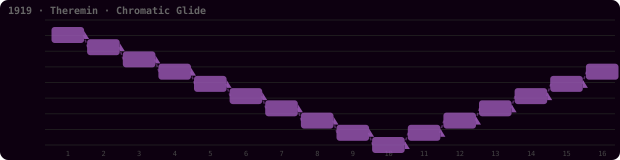
Léon Theremin accidentally invented the first electronic instrument while researching proximity sensors for the Soviet government. Instead of detecting spies, he detected melodies. The Theremin let you play music by waving your hands near two antennas — one for pitch, one for volume. It was spooky, ethereal, and completely impossible to play in tune.
Clara Rockmore became its greatest virtuoso, proving that an instrument everyone assumed was a novelty could actually make people weep. Hollywood took notice and used it for every alien invasion and psychological thriller for the next 30 years.
1964 Moog — Voltage Becomes Music
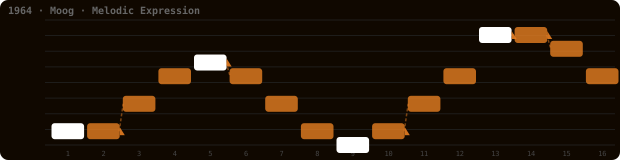
Robert Moog changed everything with the Moog Modular synthesizer. For the first time, musicians could sculpt sound from raw voltage — oscillators, filters, envelopes, all connected by patch cables. Wendy Carlos's Switched-On Bach (1968) blew the world's collective mind: wait, a machine can play Bach?
The Moog was enormous, expensive, and temperamental. It went out of tune if someone in the next room sneezed. But it sounded like nothing else on Earth, and suddenly every prog-rock keyboardist needed one. Keith Emerson literally stabbed his with knives during concerts. The synthesizer had arrived, and it was not going quietly.
1970 Kraftwerk — The Robots Are Coming
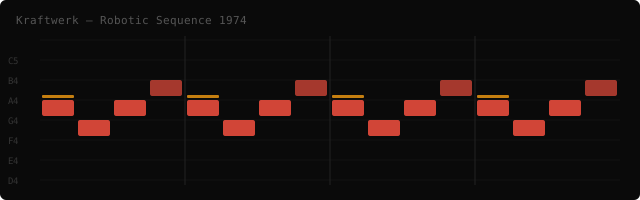
Ralf Hütter and Florian Schneider built their Kling Klang studio in Düsseldorf and proceeded to invent the entire future of popular music. Autobahn (1974), Trans-Europe Express (1977), The Man-Machine (1978), Computer World (1981) — each album was a blueprint that artists would spend decades unpacking.
Kraftwerk made electronic music that was simultaneously mechanical and deeply human, repetitive and endlessly fascinating. They influenced hip-hop (Afrika Bambaataa sampled them), synth-pop (Depeche Mode, OMD, Pet Shop Boys), techno (the entire Detroit scene), and house music. They literally performed as robots and somehow made that cool.
1974 The Synthesizer Epics — Tangerine Dream, Vangelis & Jarre
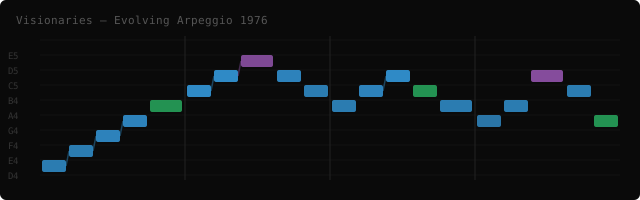
While Kraftwerk were building the future in Düsseldorf, three other visionaries were proving that electronic music could be epic — vast, emotional, and capable of filling concert halls (and eventually stadiums).
Tangerine Dream emerged from the Berlin school in 1967 and pioneered the art of the evolving sequencer pattern. Albums like Phaedra (1974) and Rubycon (1975) were built on hypnotic, motorik sequences that shifted and mutated over long stretches — patterns that seemed to have a life of their own. They scored over 60 films, proving that synthesizers could tell stories as well as any orchestra.
Vangelis took a different path: pure improvisation on massive polysynth rigs. Blade Runner (1982) and Chariots of Fire (1981) proved electronic music could be cinematic, deeply emotional, and win Oscars. He rarely used sequencers — everything was performed live, in real time, which makes his precision all the more astonishing.
Jean-Michel Jarre dropped Oxygène in 1976 and sold 18 million copies. Then he started performing for literally millions of people with laser harps, fireworks, and projections on buildings. His concert in Moscow (1997) drew an estimated 3.5 million attendees. Because why play a club when you can play a city?
1977 Disco — The Four-on-the-Floor Revolution
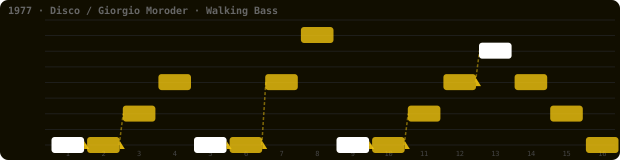
Giorgio Moroder and Donna Summer dropped "I Feel Love" and the world split in two: before and after. Brian Eno reportedly told David Bowie, "I have heard the sound of the future." He wasn't wrong.
Moroder's sequencer-driven basslines — relentless, hypnotic, machine-perfect — proved that synthesizers weren't just for prog-rock noodling. They could make people dance. Meanwhile, in New York, Larry Levan at Paradise Garage and Frankie Knuckles at the Warehouse were laying the groundwork for house music.
1981 The TB-303 — A Beautiful Failure
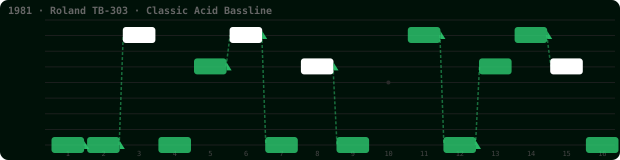
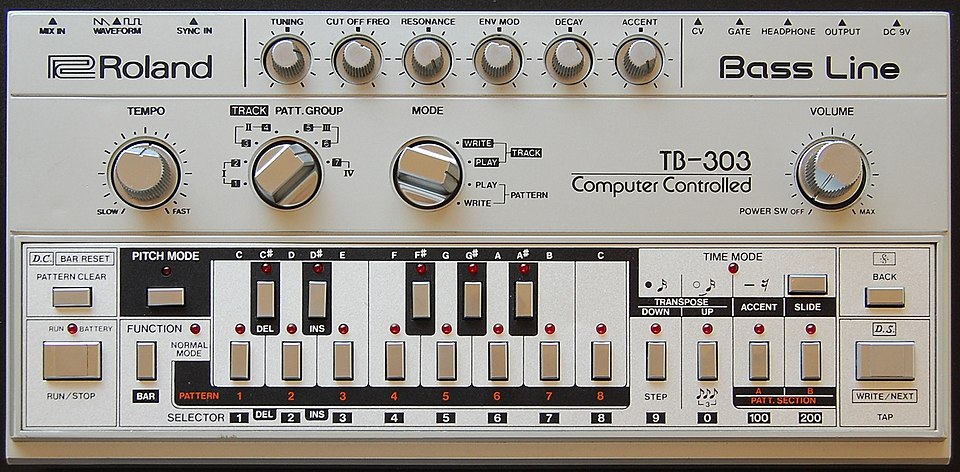
Roland released the TB-303 Bass Line as a practice tool for guitarists who couldn't afford a real bassist. It was, by any conventional measure, a complete failure. It sounded nothing like a bass guitar. It was confusing to program. It had no MIDI — because MIDI hadn't been invented yet. It sold poorly and was discontinued within two years.
1983 MIDI — The Language That Connected Everything
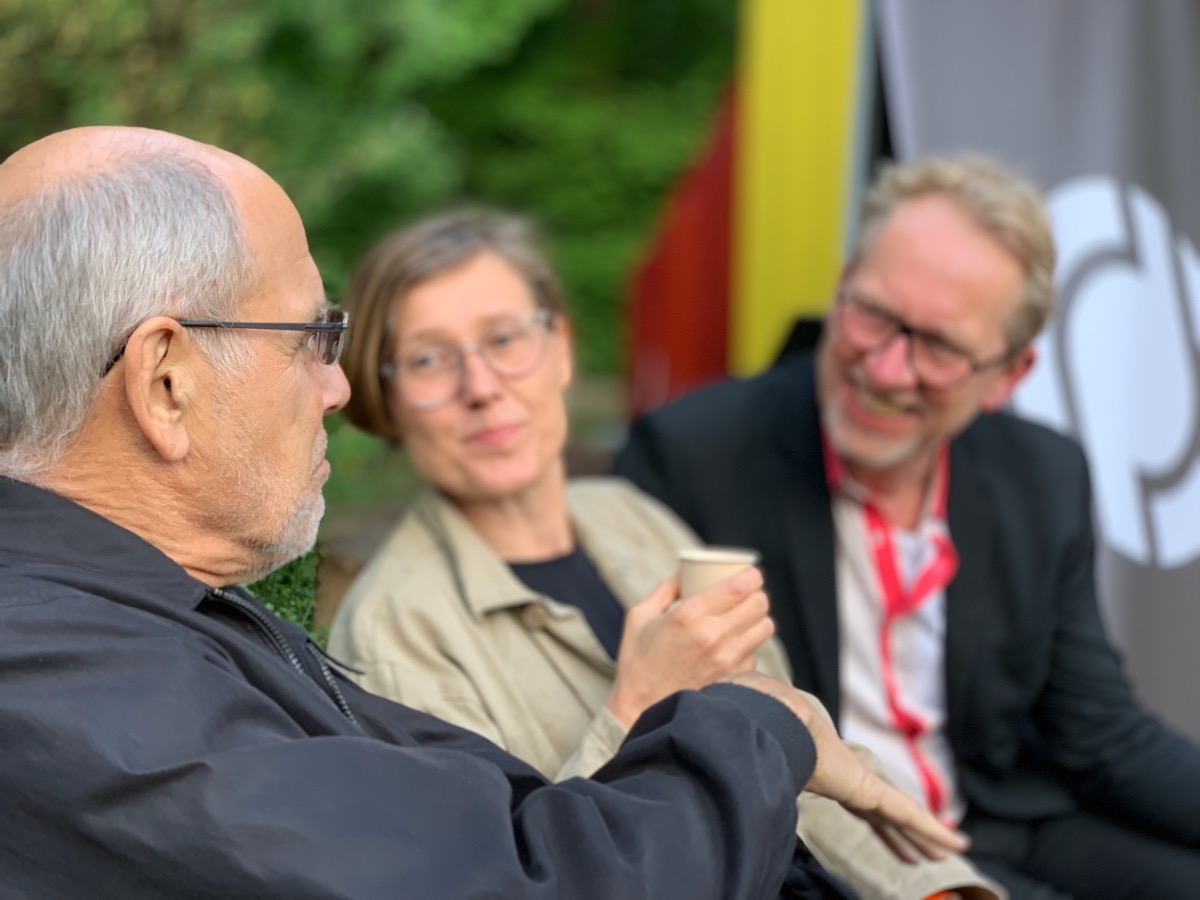
Dave Smith at SuperBooth with Andreas Schneider (SchneidersLaden) and his wife. Renger Koning, Richie Hawtin and I met Dave three weeks before he passed away. One of those moments you don't forget.
In 1981, Dave Smith of Sequential Circuits proposed a wild idea: what if synthesizers from different manufacturers could talk to each other? Two years later, MIDI 1.0 was born — a universal language that let any instrument communicate with any other. A Roland drum machine could sync with a Korg synth could sequence a Moog. For the first time, the brand on the front panel didn't matter.
It was an act of radical generosity in a competitive industry. Smith gave the specification away for free. No licensing fees, no proprietary lock-in. The result: an entire ecosystem of interoperable instruments that's still going strong over 40 years later. Every DAW, every controller, every plugin — including Bacara — speaks MIDI because one person decided that openness was more important than profit.
Dave Smith passed away in June 2022. He left behind the Prophet-5, the Prophet-6, the OB-6 (with Tom Oberheim), and a protocol that quite literally connects the entire music technology world.
1987 Acid House — The Second Summer of Love
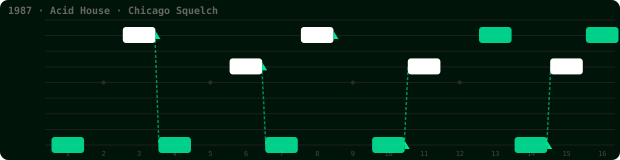
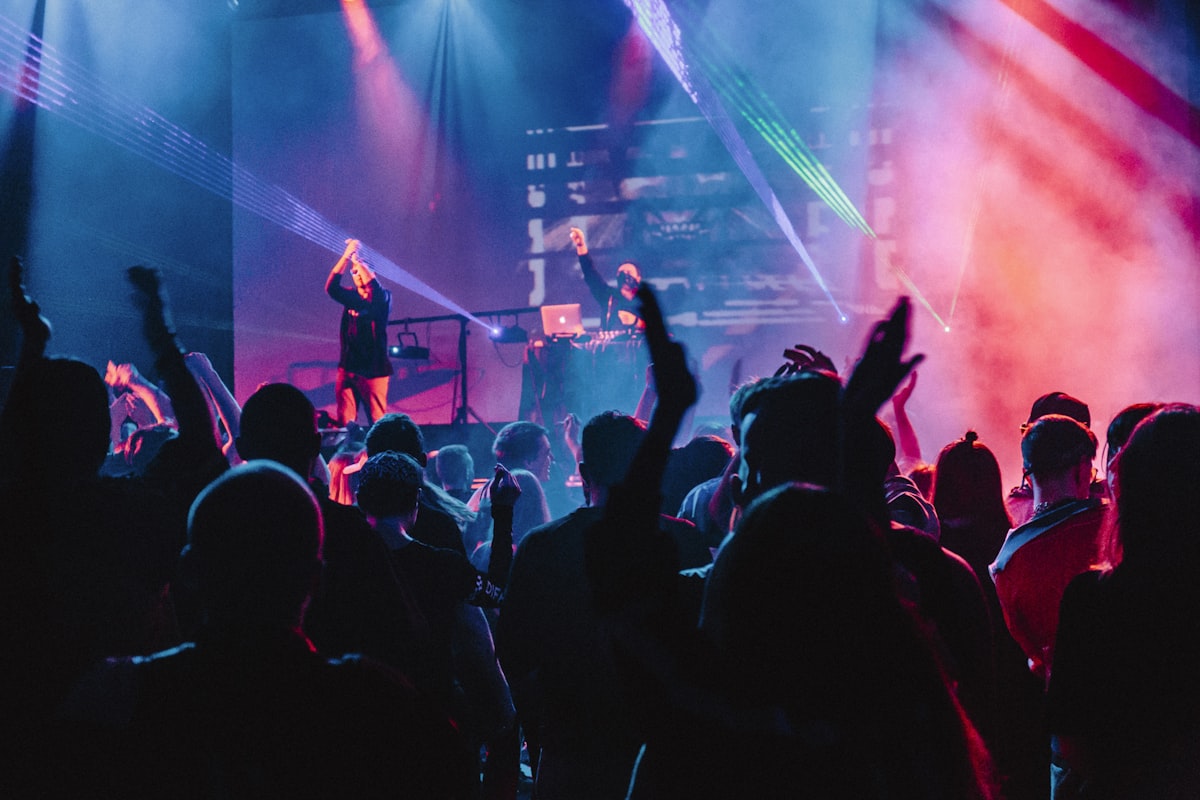
While Phuture was warping minds in Chicago, DJ Ron Hardy was playing "Acid Tracks" at the Music Box — sometimes four times a night, sometimes on a loop for an hour. Across the Atlantic, Danny Rampling brought the energy back from Ibiza to London, opening Shoom in 1987.
1988 Detroit Techno — The Belleville Three
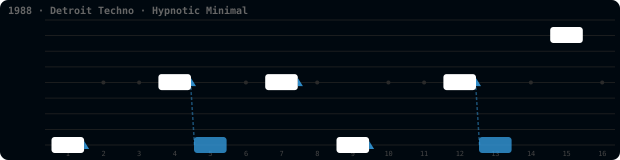
In the suburbs of Detroit, three high school friends — Juan Atkins, Derrick May, and Kevin Saunderson — were listening to Kraftwerk, Parliament-Funkadelic, and the futurism of Alvin Toffler, and creating something entirely new. Atkins called it "techno."
1992 Jungle & Drum 'n' Bass — Breakbeats Go Nuclear
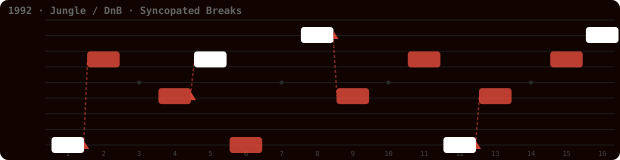
London's pirate radio scene took breakbeats, sped them up to 160+ BPM, added massive sub-bass, ragga vocals, and sheer audacity. Goldie, LTJ Bukem, Roni Size, and Shy FX turned chopped-up Amen breaks into an art form so complex it made jazz musicians raise their eyebrows.
Jungle was chaotic, multicultural, and absolutely relentless. When Roni Size won the Mercury Prize in 1997 with New Forms, it was official: the breakbeat mutants had conquered the mainstream.
2000 Minimal Techno — Less Is More (No, Even Less Than That)
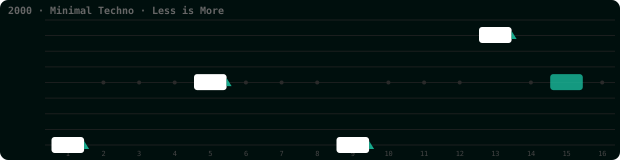
Richie Hawtin, Ricardo Villalobos, and Robert Hood stripped techno down to its molecular level. A kick drum. A hi-hat. Maybe a single filtered tone evolving over eight minutes. The silence between the notes became as important as the notes themselves.
Hood's "Minimal Nation" (1994) had already laid the blueprint, but the early 2000s Berlin scene — Berghain, Panorama Bar — turned minimalism into a lifestyle.
Richie Hawtin himself pioneered an early version of Bacara — back when it was a Node.js command-line tool — on stage in Portugal and at IRCAM in Paris for a Steve Reich tribute. We didn't plan that as a marketing story. It just happened.
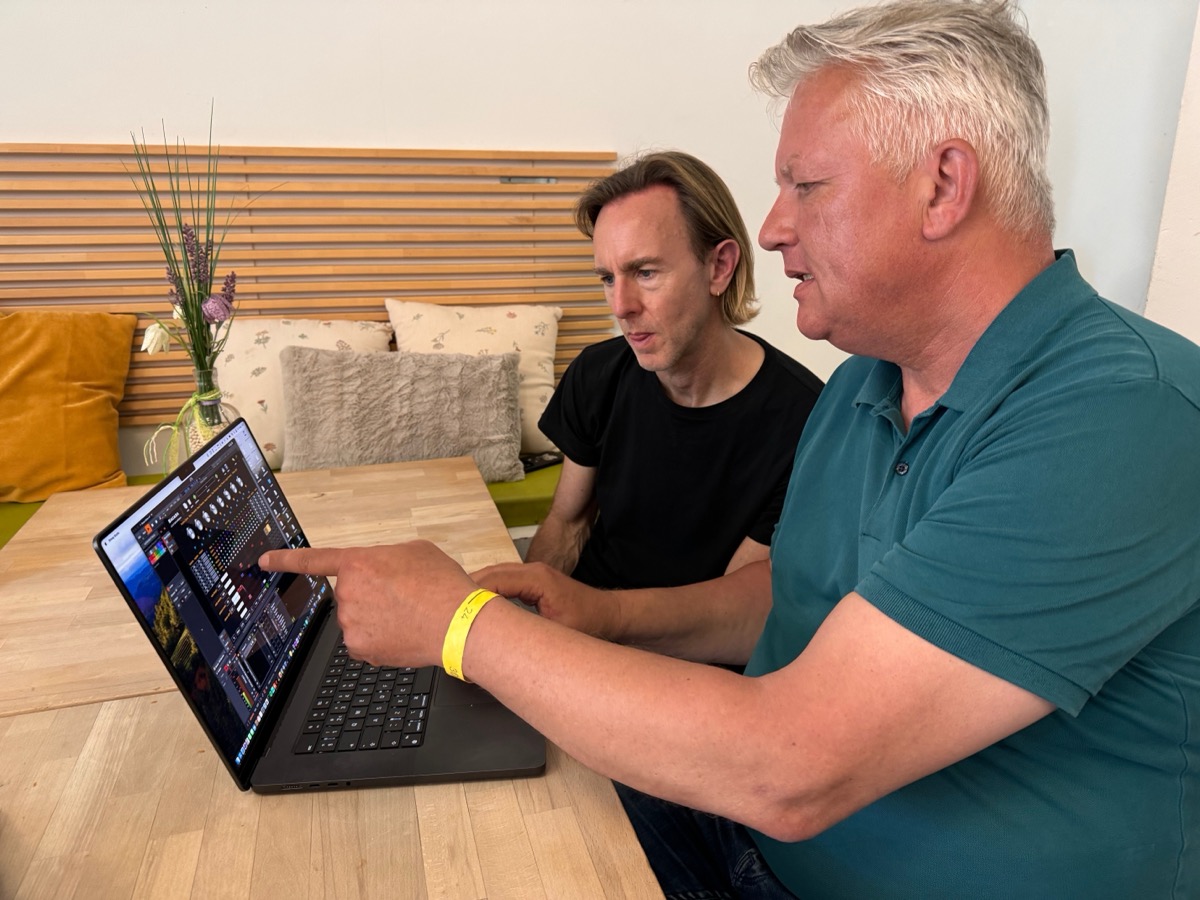
Richie exploring Bacara
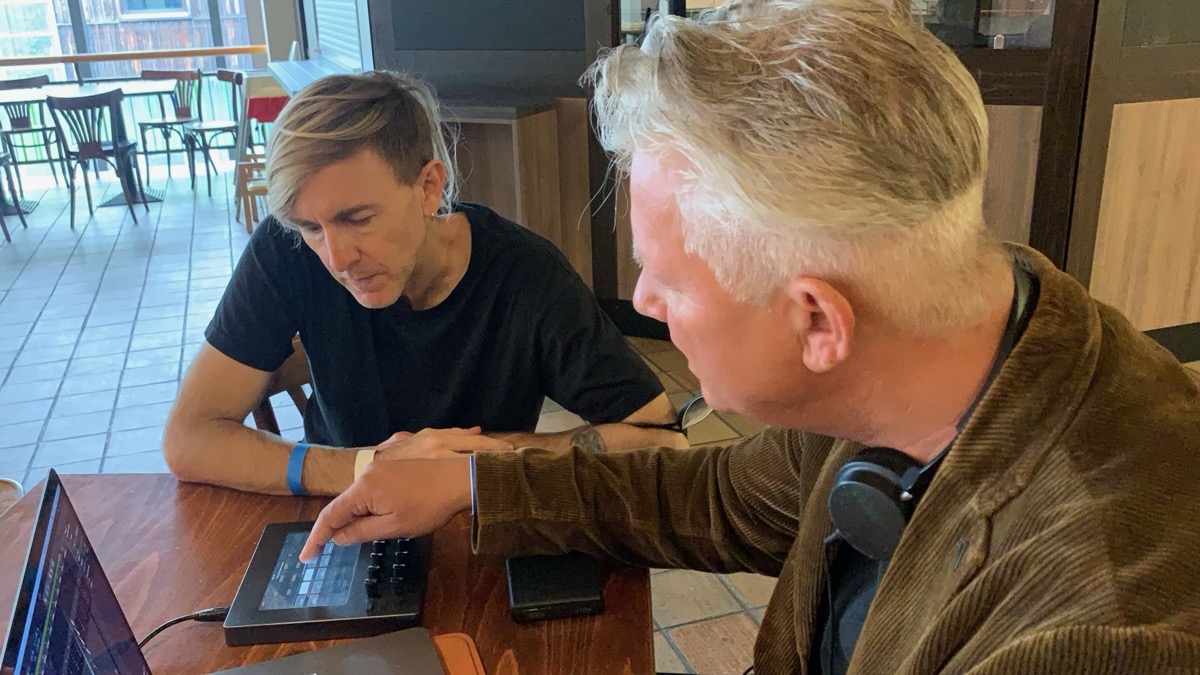
Up close with the early UI
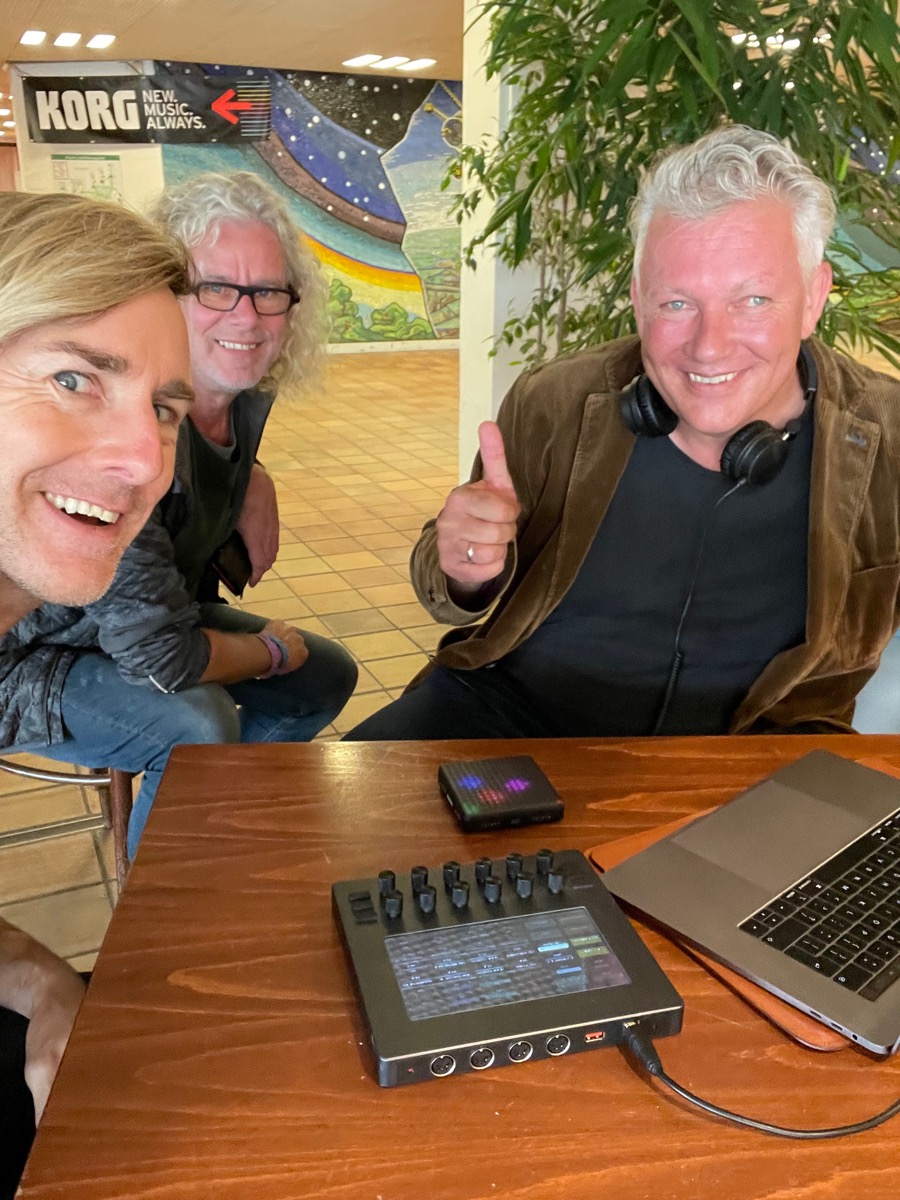
Thumbs up at the Korg booth
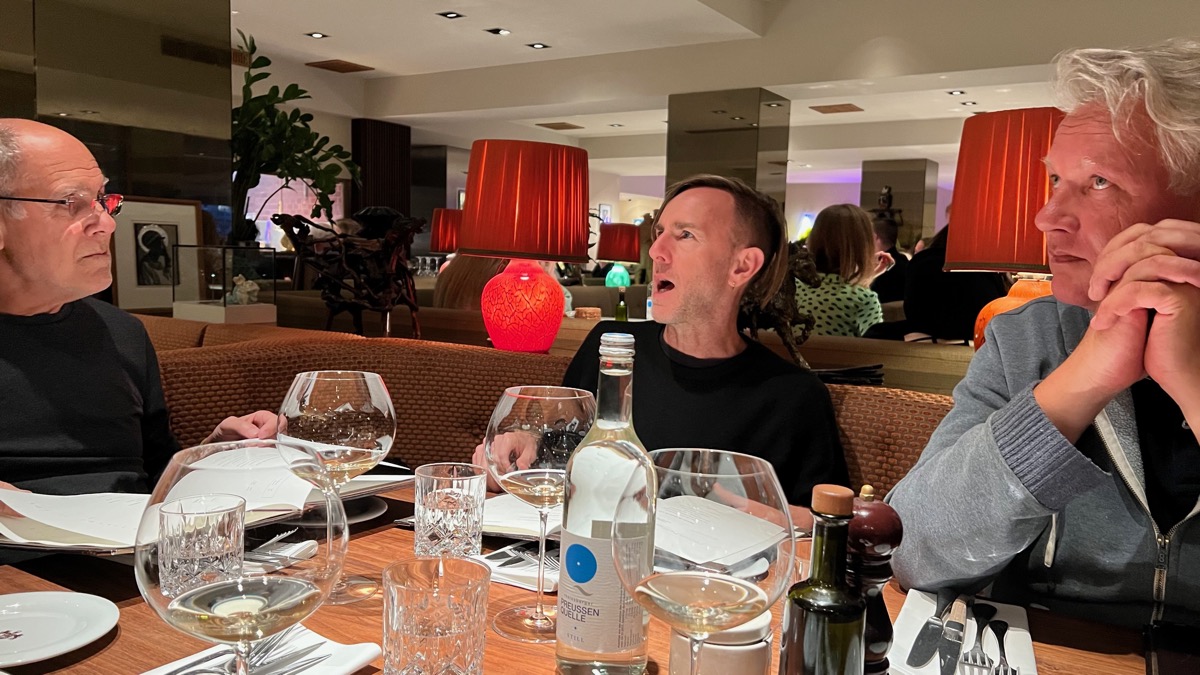
Dinner with Richie & Dave Smith
Early Bacara demo to Richie
ROLI Block AXYZ Gems MIDI control
"Acid Guru Joris!" — We're framing this.
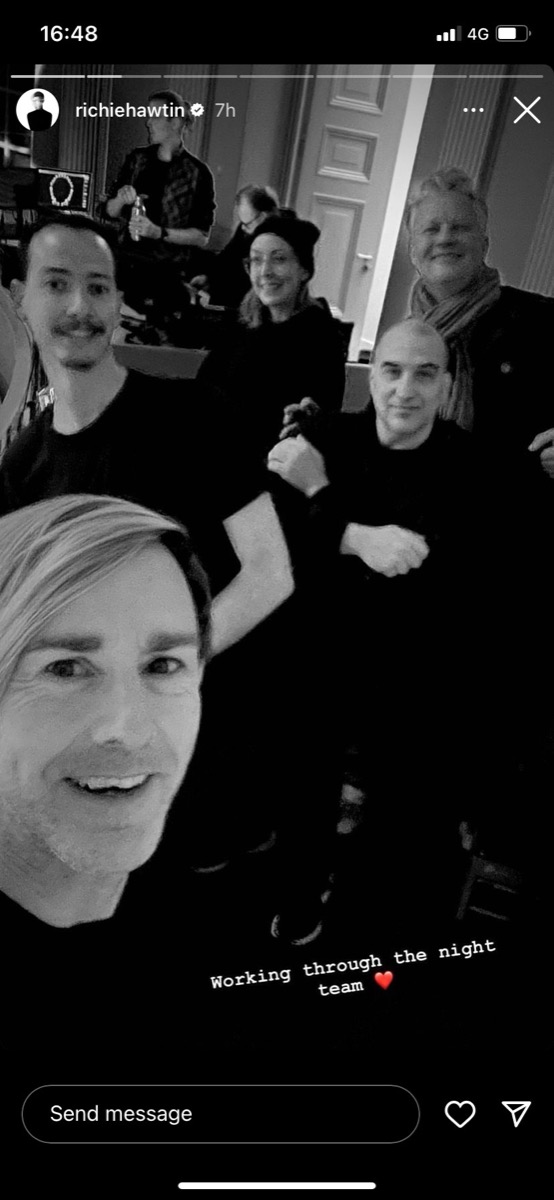
Richie's Instagram: "Working through the night team ❤️"
2024 Bacara — The Pattern Awakens
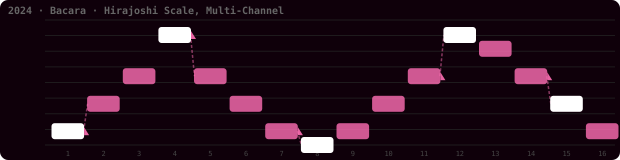
And here we are. Bacara is one more machine in that line. Built in C++ with a pattern engine that learned from everything from Bach cello suites to acid house basslines, it generates with intent and remembers what it played. 20 built-in pattern styles. 38 scales. 18 deviation lanes. 12 parallel variants. Seed-based determinism that means your happy accident is repeatable.
2026 Bacara Plugin v2.0.0: Three Sequencers, One Machine
Bacara Plugin v2.0.0 runs three sequencers side by side. The chord sequencer writes the progression and can hold the melody to its scale. The melodic sequencer writes the line on top of it, from twenty training styles, acid through Renaissance, or from a style you write down yourself: ten bass grammars that follow the chords and the kick, and a lead that plays in the gaps the drums leave. The rhythm sequencer plays twenty-one drum voices, each with its own generative lanes.
A preset holds 128 pattern slots in eight banks, switched on the next pass. Every sounding sequencer drags into your DAW as a MIDI clip, and Bond runs one Bacara across several DAW tracks, each playing its own part. It makes no sound of its own: what you hear is your synth.